
Surname & cultural heritage
Peron: a name born from Peter, from the rock to the myth
The surname Peron belongs to that great family of names derived from the first name Peter. At its origin lies the Latin Petrus, itself from the Greek Petros, the translation of the Aramaic kepha meaning "rock". From the intermediate form Petronem came, through successive evolutions, the variants Pedron, Pezron, and finally Peron.
In France, Peron is mainly recorded in Brittany (Finistère, Morbihan) and in the Pas-de-Calais, where it functions as an affectionate diminutive of Pierre. In some regions, it can also designate a "large stone", a remarkable rock in the landscape, which became a place name and then a surname. The name spread widely throughout Latin Europe and has many close forms — Perron, Péron, Pedron, Peroni in Italy and Corsica, Perón in Spanish — all stemming from the same root.
Eva Perón, the madonna of the Argentine people
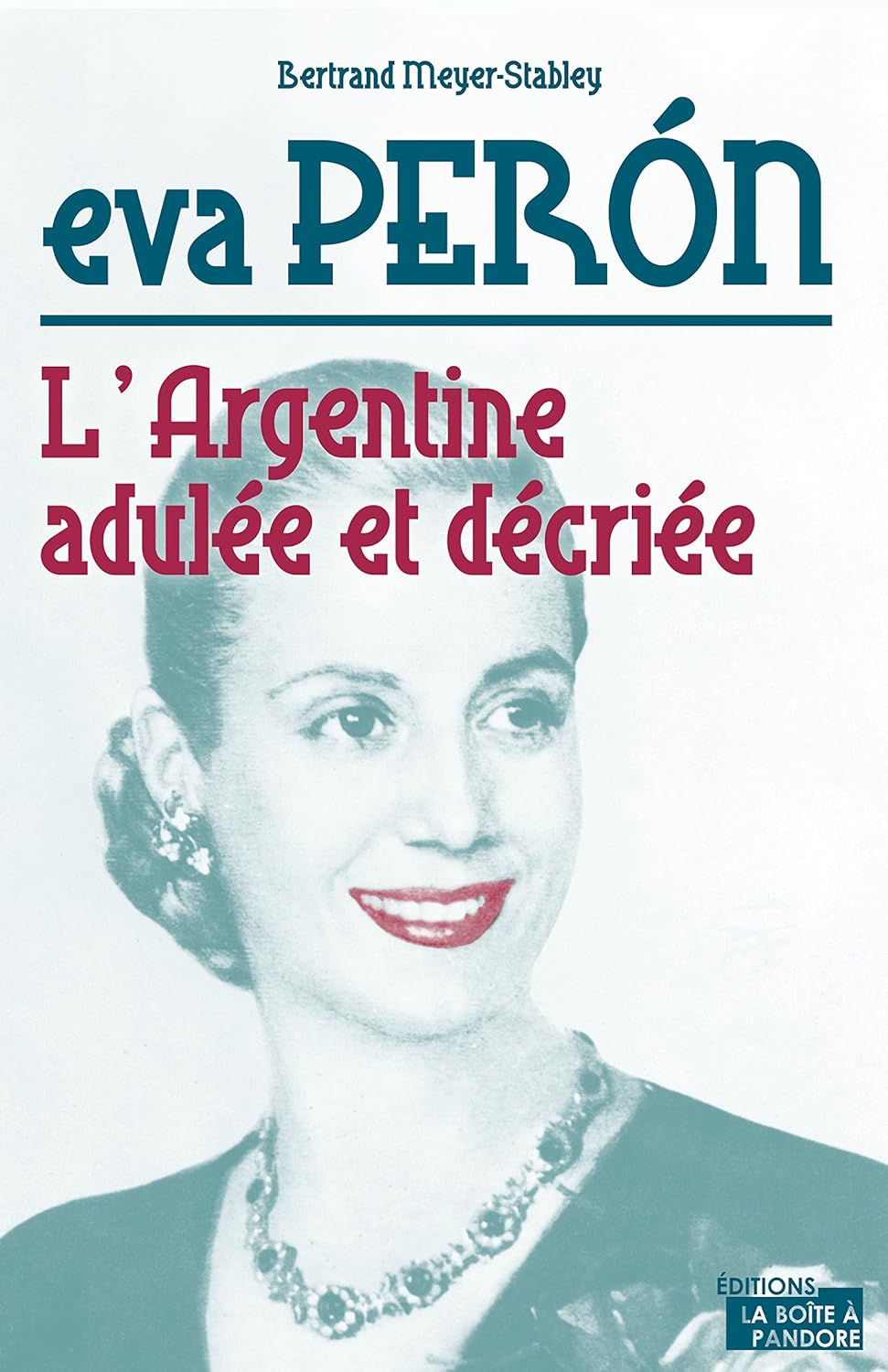
It is Eva Perón (1919-1952), nicknamed Evita, who gave the surname its most moving global reach. Born María Eva Duarte on 7 May 1919 in Buenos Aires province, the illegitimate daughter of a Chivilcoy farmer and his servant, she arrived as a teenager in the Argentine capital with one dream: to conquer the stage. A radio announcer and then actress on Radio Belgrano, she met Colonel Juan Domingo Perón in 1944 and married him on 10 December 1945.
First Lady at 26 when her husband was elected president in 1946, she devoted herself to the cause of the humble — the descamisados ("shirtless ones") — founded the Eva Perón Foundation, which built hospitals, schools and workers' housing, and in 1947 obtained the right to vote for Argentine women. Struck down by uterine cancer, she died on 26 July 1952, aged 33. Argentine workers gave up a day's wages to erect a mausoleum in her honour. Proclaimed "Spiritual Leader of the Nation", she became one of the most powerful political myths of the 20th century — the very one told in the book we are featuring here.
Juan Perón, the general who transformed Argentina
Her husband, Juan Domingo Perón (1895-1974), born in Lobos in Buenos Aires province, was the most prominent political figure in modern Argentine history. An officer trained at the Military Academy from 1911, he closely observed Italian Fascism during a stay in Europe in the late 1930s and drew from it his own doctrine, Peronism — or justicialism — founded on three pillars: social justice, economic independence and political sovereignty.
Elected president of the Argentine nation in 1946 by universal suffrage, he was the first head of state in his country to grant women the right to vote, to nationalise the railways and to establish genuine social legislation. Overthrown by a military coup in 1955, he endured eighteen years of exile — in Paraguay, Venezuela, then Madrid — before returning triumphantly to power in October 1973. He died nine months later, on 1 July 1974, leaving behind a political movement that remains, even today, one of the most enduring forces of Argentine life.
François Péron, naturalist and father of anthropology
Well before the Peróns of Argentina, the surname had already engraved its name in French scientific history. François Auguste Péron (1775-1810), born in Cérilly in the Allier, lost his right eye at 18 on the Rhine front during the Revolutionary Wars, before turning to medicine and natural history in Paris.
Thanks to the support of the Jussieus and of Lacépède, he embarked in 1800 on the Géographe, as zoologist of the great Baudin expedition to the Southern Lands — present-day Australia. With the draughtsman Charles-Alexandre Lesueur, he brought back a prodigious collection of 100,000 specimens and over 2,500 new species, which according to Cuvier's report doubled by itself the number of species then known. He also conducted the first measurements of deep-water temperatures and — above all — was the inventor of the word "anthropology" in its modern sense, devoting to the observation of the peoples encountered writings that make him one of the discipline's founding fathers. A peninsula in Western Australia, Peron Peninsula, today bears his name.
A surname, a universal memory
To bear the name Peron today is to inherit a history that runs from medieval Brittany to the Australian shores, from the Argentine working-class lands to the salons of the Belle Époque. From the madonna of the Argentine people to the general who refounded Argentina, from the Bourbonnais naturalist who named anthropology to the countless Péron, Perron and Peroni scattered across three continents, this surname reminds us that a simple diminutive of "Peter" can travel through centuries and oceans to become, in its own way, a rock in history.